
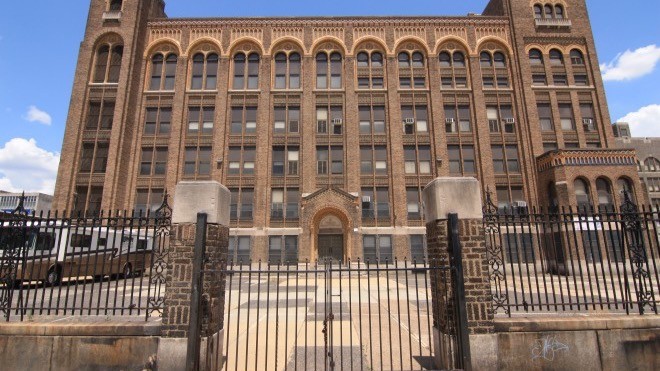
 Across the U.S., public school infrastructure is in trouble — and it’s not a secret. The American Society of Civil Engineers has consistently given school facilities a D+ rating, pointing to aging buildings, deferred maintenance, and chronic underinvestment.
This isn’t just a facilities issue. It’s a funding model problem.
Every district has a capital budget. Almost none of them are large enough to fully modernize their schools.
So leaders are forced into impossible tradeoffs:
- Fix HVAC or roofs
- Address air quality or energy efficiency
- Modernize one school or stretch dollars across many
Holistic modernization rarely happens.
The Evolution of a Better Approach
To solve this, the industry has been evolving for years:
1. Energy Performance Contracting (EPC) A strong starting point. ✔️ Energy upgrades that pay for themselves ✔️ Proven and widely adopted ❗ But limited in scope — focused mostly on energy
2. Energy Savings as a Service (ESaaS) A major step forward. ✔️ Shift from project-based to service-based delivery ✔️ Introduced private capital with no upfront cost ✔️ Expanded scope beyond just energy
Still, one challenge remained: Schools need more than energy solutions — they need full-scale modernization.
3. School Modernization as a Service™ (SMaaS)
This is the next evolution.
Powered by ESaaS, SMaaS enables districts to:
✔️ Modernize HVAC, lighting, roofing, building envelope, and indoor air quality ✔️ Access large-scale private capital without adding debt ✔️ Transfer performance, maintenance, and technology risk ✔️ Stack and amplify existing capital budgets instead of being limited by them.
Turning Fixed Budgets into Growing Investment Engines
Here’s the fundamental shift:
Traditional capital budgets are fixed and constrained. SMaaS makes them dynamic and expandable.
By combining:
- Private capital infusion
- Immediate operating expense reductions
- Long-term performance guarantees
Districts can:
- Deliver more projects, faster
- Reinvest savings into additional improvements
- Build momentum year over year
The result: A compounding effect where limited capital no longer limits progress.
What This Means for School Leaders
This isn’t just financing — it’s a new operating model:
- From CapEx limitations → OpEx flexibility
- From piecemeal upgrades → comprehensive modernization
- From owning risk → transferring risk
- From waiting years → acting now
And ultimately:
Better buildings → healthier environments → stronger student outcomes
The Bottom Line
The issue isn’t whether we know what needs to be fixed. We do.
The issue is how we pay for it.
School Modernization as a Service™ (SMaaS) is built to solve that — at scale.
If you’re thinking about how to stretch limited capital further in your district or state, this is a conversation worth having.
